Hail Brittania!

The British people have spoken but we don’t know what they’ve said.
-Paddy Ashdown
- The Conservative Party failed to gain a majority despite widespread dissatisfaction with the economy and fatigue after 13 years of Labour rule.
- The incumbent Labour Party gained its smallest share of votes in almost 80 years, yet still came in second despite polling only 29% and losing almost 100 seats.
- The Liberal Democrats garnered only a tad higher percentage of votes than 2005, far short of pre-election polling numbers, and lost 13 seats (while gaining 8 new ones) despite general expectations of a net gain of at least 20.
Cows Coming Home
I thought the far-flung friends of once-frequent commenter Karen might like to know that I spoke with Karen late last week and that she reports all is well with her. The family is just about completely resettled back in their home, which they returned to a few months ago after deciding not to exercise the option to purchase the bigger farm they’d been leasing. As one of the consequences of returning to their old place is the loss of a regular internet connection, Karen says it is unlikely that she will be returning any time soon and sends her regards to one and all.
Although a heavy snow was falling during our conversation, Karen said spring was in the air and that their cows will soon be back in the pasture. (Karen also asked me to remind everyone to support small family farmers by buying organic milk!)
Rorschach Test
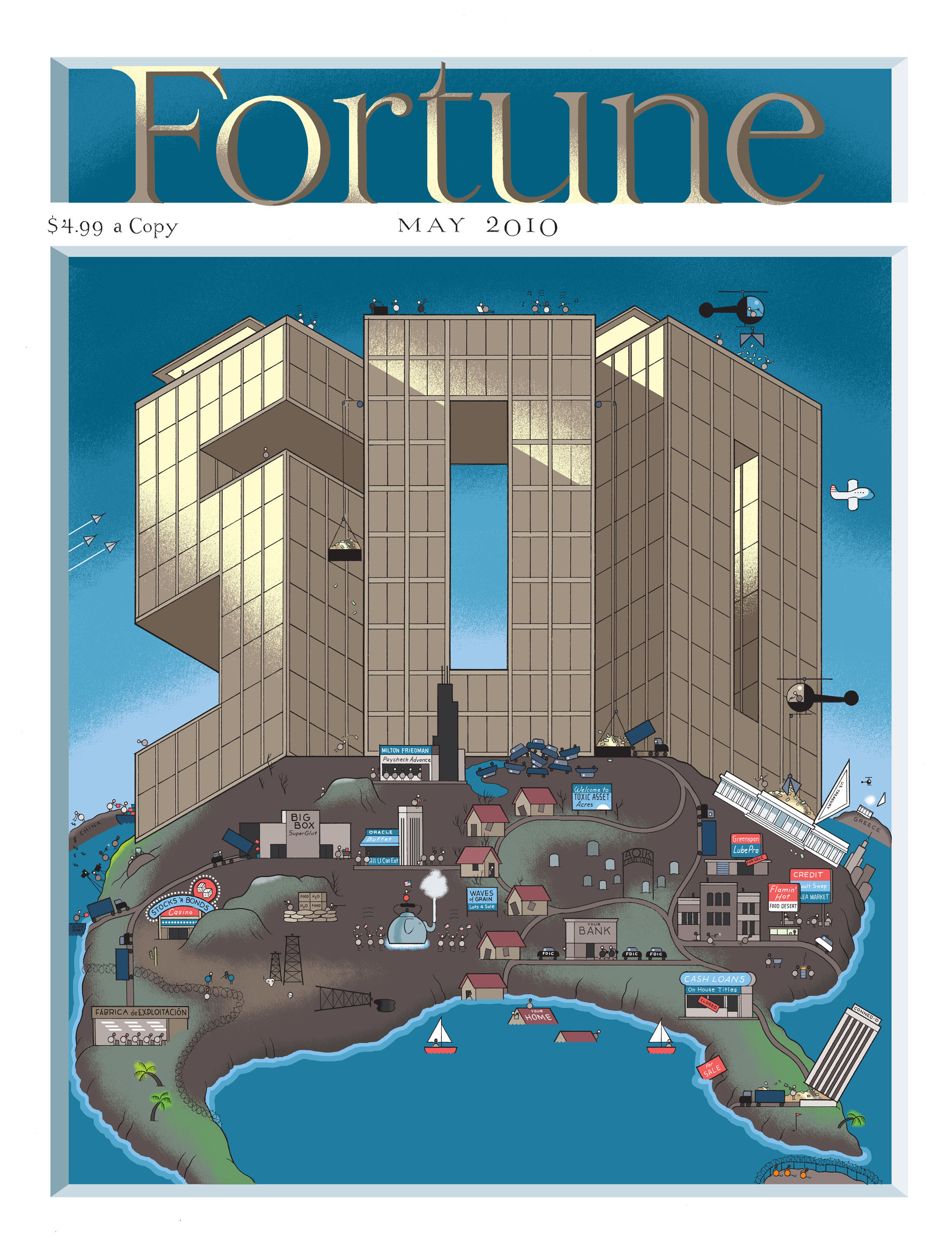
This Chris Ware work for the cover for the May issue of Fortune was rejected. The various messages contained therein would probably make a great political Rorschach test. (Click on the graphic to zoom in on details.)
(Via Transatlantic.)
2nd and 3rd-Generation Friends
It’s so cool when that happens.
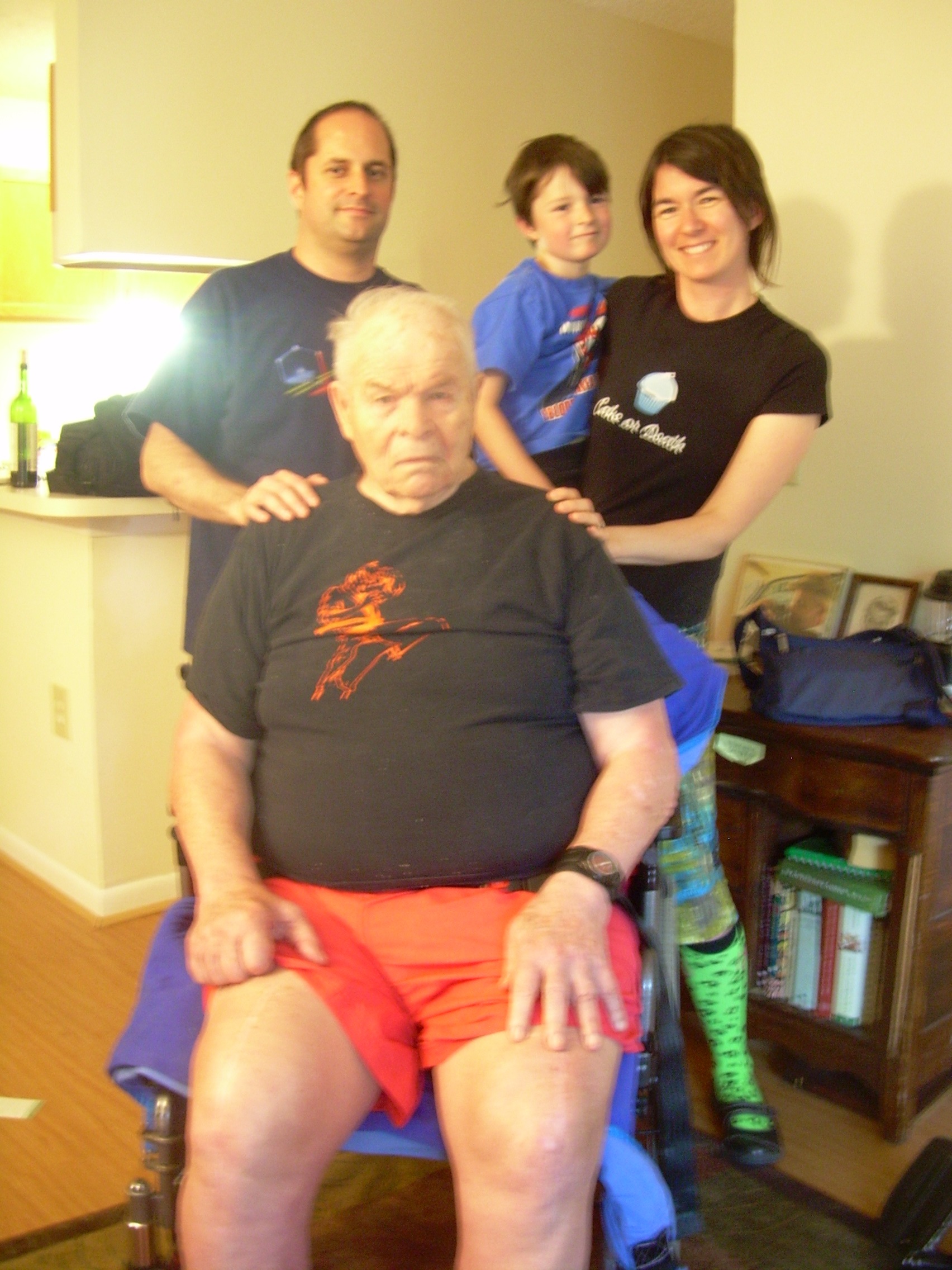
Ralph’s father Warren operated on Jacques in 1975, and we became fast friends with the family. Ralph was Ben’s age then.
Robyn built and Ralph hosts Jacques’ website, donbas.com.
Robyn is Vampandora on Twitter. Ralph works for a company that tries not to be evil. They are serious foodies (don’t just make their own beer but grow their own hops) and have a website called foodporn.com that is to drool for.
We were at their wedding on a cliff overlooking the Pacific in 1999. Jacques doesn’t like heights, and was wobbly from his second knee replacement and probably the beginnings of his present troubles, but by God he got out there.
Ralph’s mother Margie visited us here 3 years ago, and when I get to Chicago in the summer I always visit them. But the last time we saw Ralph and Robyn was in New York in late 2003. Ben became a twinkle in someone’s eye about a month later. We met him today for the first time: our 3rd-generation friend.
How Valuable is Intelligence?
Ann Althouse (on a roll this morning) quotes P.J. O’Rourke in a (highly intelligent, ironically) expansion on William F. Buckley’s remark that
I’d rather entrust the government of the United States to the first 400 people listed in the Boston telephone directory than to the faculty of Harvard University.
I’m sure up at Harvard, over at the New York Times, and inside the White House they think we just envy their smarts. Maybe we are resentful clods gawking with bitter incomprehension at the intellectual magnificence of our betters. If so, why are our betters spending so much time nervously insisting that they’re smarter than Sarah Palin and the Tea Party movement?…
The C student starts a restaurant. The A student writes restaurant reviews. The input-worshipping universe of the New York Times is like New York itself—thousands of restaurant reviews and no place we can afford to eat.
Let us allow that some intelligence is involved in screwing up Wall Street, Washington, and the world. A students and Type-A politicians do discover an occasional new element—Obscurantium—or pass an occasional piece of landmark legislation (of which the health care reform bill is not one). Smart people have their uses, but our country doesn’t belong to them. As the not-too-smart Woody Guthrie said, “This land was made for you and me.” The smart set stayed in fashionable Europe, where everything was nice and neat and people were clever about looking after their own interests and didn’t need to come to America. The Mayflower was full of C students. Their idea was that, given freedom, responsibility, rule of law and some elbow room, the average, the middling, and the mediocre could create the richest, most powerful country ever.
That’s wonderfully said, but it is, of course, not a condemnation of intelligence but an argument for multiple intelligences. O’Rourke is talking about a particular, narrow kind of neck-up intellect, based on a very top-heavy books-to-real-life-experiences ratio. Brains in jars, disconnected from hands and guts. Would you even call that “intelligence”?

I love this candid photo currently appearing on The Times website, taken during tonight’s third and final debate between the three leaders of the parties contesting the British elections next week. That’s David Cameron of the Conservative Party on the left, Nick Clegg of the Liberal Democrats in the middle, and current Prime Minister Gordon Brown of the Labour Party on the right.
For those who may not be following this story:
This year marked the first series of televised debates between potential prime ministers in British history. One of the unanticipated results has been the meteoric rise in support for the hitherto perpetual third-place Liberal Democrats. Odds are now good that they will come in a strong second (up to twice their pre-debate support) and Labour will garner it’s lowest vote percentage (perhaps only 25%) in over 80 years. Despite this, Labour will probably end up with at least two times as many seats in the new Parliament as the Lib Dems. Prior to the debates, it was widely assumed that the Conservatives would win an absolute majority, but that is far from assured now.
Poverty is Like Gravity.
After the CNAs (certified nurse assistants) from hospice bathe and dress J and get him up, I like to hang out with them and have coffee before they go on to the next patient or (since we’re often their last stop) to their family caregiving duties at home. Most of them are black (in all the multifarious shades of golden, freckled, ruddy and brown that word so flatly fails to suggest), and single motherhood is the norm in their community; the men have long since left or been kicked out, and those who’ve stayed are often described as not much help or not worth the trouble. (By contrast, the South American woman who stays with J when I go away is married, and her husband helps with their three boys — all of whom were born with congenital vision problems and/or cleft palate, possibly because of occupational chemical exposure of one or both parents. To paint these trends as monolithic would be stereotypical, but to say they are representative is, sadly, just statistical.) On the plus side, mothers/grandmothers are always there to be relied on and to take care of babies and little children while daughter-mothers go to work and to school, struggling doggedly for education and certification and advancement. In return, they take care of their aging mothers who struggle with arthritis, diabetes, heart failure. It’s a hard life and takes a heavy toll on health.
Talk about the working class, these women work harder than anyone I’ve ever seen in the most palpable sense of “work.” They are extremely conscientious. They need physical strength and endurance, bottomless patience, basic medical knowledge, a strong stomach, a sense of humor, and a kind heart to do what they do. And they get paid, and sometimes treated, very poorly. Home health agencies charge the client $20 an hour and pay the woman or man who does all the work $9. Hospice, I hope, pays more than that, but probably not a lot more. Hospice patients, they say, are mostly grateful and respectful, but home health patients — those just out of the hospital convalescing from something acute and temporary — often treat them high-handedly like servants, expecting them, for instance, to clean house.
As I was thinking about what they’ve achieved against the odds and what it takes out of them, it struck me that poverty is like gravity. The lower in economic altitude you start, the stronger a force you must overcome to rise. Against that down-dragging force, to get an education, to have a career, to raise children and get them into college, you must ignite a solid rocket booster of will and determination over and over again.
It always takes effort and perseverance to achieve anything. Inertia and dissipation are universal drags on our dreams. But those of us who were launched into orbit by the circumstances of our birth — that is, by the struggles of our ancestors — will never know what it takes, and takes out of you, just to get off the ground.
Colors in Cultures
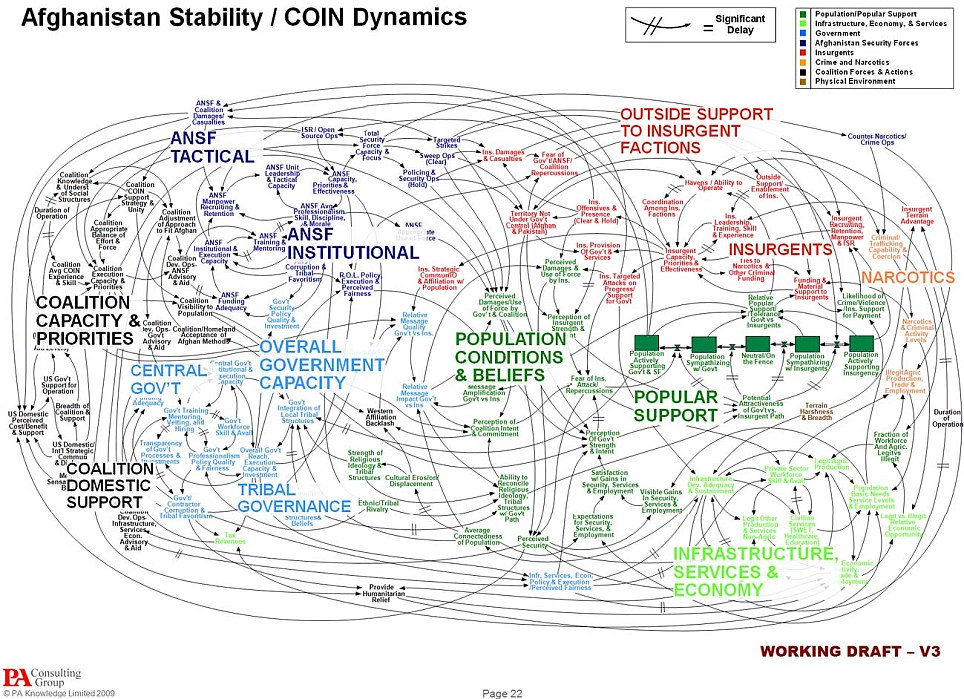
A cool graph of what different colors (sorry, American spelling!) mean to various cultures. It takes a bit of deciphering, but it fascinated me…

from the equally cool blog Information is Beautiful, where you can get a big poster of this.
 Ambiance